Beyond the Basics: How Advanced Platform Engineering Is Reshaping Vaping in 2026
 2026-03-20
 GUIDES
Scroll through any vaping forum today or ask experienced users what separates a satisfying setup from a frustrating one, and the answers consistently point to the same fundamentals: consistency, reliability, and freedom from leaks or burnt hits. Flashy wattage wars have given way to deeper conversations about what happens inside the chamber—where e-liquid meets heat and becomes vapor.
This guide examines the technological foundations that define modern vaping. Instead of another accessories catalog, we're exploring how two distinct engineering platforms have evolved to solve the real problems vapers face every day, and highlighting the latest devices that showcase these innovations.
The Shift from Components to Systems
Early vaping devices were modular by necessity. Tanks, coils, batteries—each piece came from different manufacturers, and users mixed and matched hoping for compatibility. That approach worked, but it also created variability. A coil that performed beautifully in one tank might leak or mute flavor in another.
The industry has moved toward integrated platforms. Today's leading manufacturers design entire systems—coil architecture, cartridge structure, material selection, and device calibration—as unified solutions. This systems-level thinking delivers consistency that modular approaches never could.
Two platforms have emerged as reference points in this new landscape, each approaching the core challenges of vaping from different angles.
Platform One: PnP X – Reimagining Coil Architecture
The PnP X platform represents a fundamental rethinking of how coils should be built and how they should perform over time. Traditional coils often degrade unevenly, developing hot spots that scorch cotton and distort flavor long before the coil stops firing entirely. PnP X addresses this through a mesh-distributed heating system that spreads energy evenly across an expanded surface area.
What distinguishes this platform is its 4-layer leakage-proof architecture. By physically isolating the airway, heating zone, and air cavity, engineers created multiple independent barriers against e-liquid escape. For anyone who has reached into a pocket to find a sticky mess, this kind of mechanical redundancy matters more than any feature list suggests.
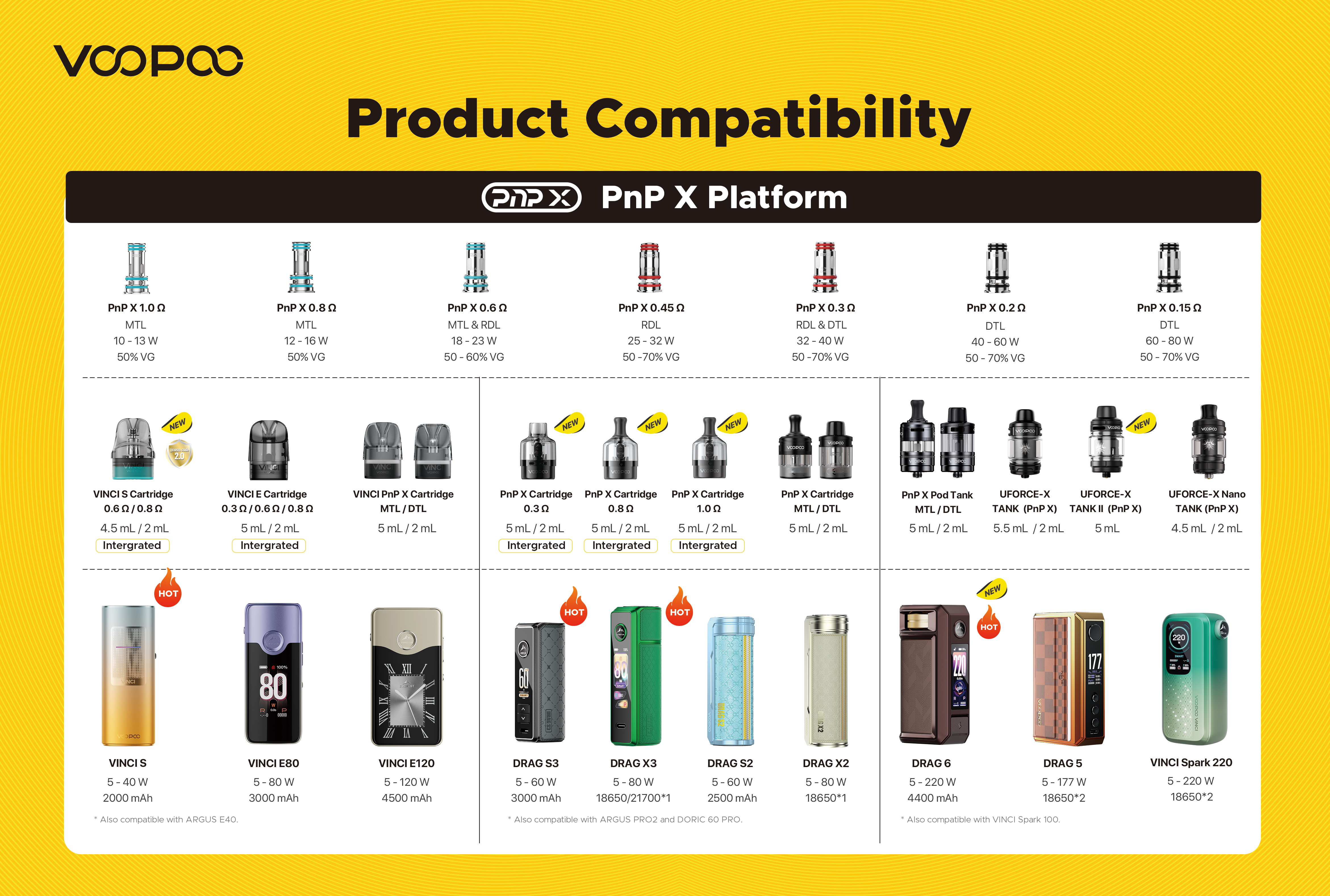
The performance metrics are straightforward: PnP X coils consistently handle up to 100 mL of e-liquid before requiring replacement. For daily vapers, that translates to weeks of use from a single coil. The platform supports resistance options spanning tight mouth-to-lung draws to unrestricted direct-lung hits.
Platform Application: PnP X is primarily utilized in Mod and Pod Mod products, with VOOPOO's DRAG series serving as the flagship lineup showcasing this coil architecture.

Featured Devices: PnP X Platform
DRAG S3 and DRAG X3
The DRAG S3 and DRAG X3 showcase PnP X technology while catering to different user preferences. The DRAG S3 delivers 60 W with a built-in 3000 mAh battery—ideal for MTL users who prioritize battery life and portability. It features a 0.96-inch TFT display and zinc-alloy construction.
The DRAG X3 offers 80 W output and supports external 18650/21700 batteries, catering to DTL enthusiasts who want swappable power for extended use. It steps up with a 1.65-inch touchscreen. Both devices integrate PnP X cartridges for consistent flavor up to 100 mL without coil burnout, and feature capacitive unlock sensors for instant touch-to-unlock safety.
DRAG 6
The classic ARGUS series returns with the all-new DRAG 6, launched in early March. It features the upgraded UFORCE-X Tank II, now integrated with the advanced PnP X platform. The UFORCE-X Tank II introduces a golden triangle airflow structure that delivers smooth, concentrated airflow and maximizes flavor. Its top-fill, top-side airflow design ensures leak resistance, while the 5 mL capacity supports seamless transitions from DTL to MTL vaping. A rotary dial provides precise airflow control, and the precision control wheel allows intuitive power adjustment.

The DRAG 6 is powered by the upgraded GENE TT 3.0 chip, which maintains user-set wattage even below 10% battery—outperforming competitors. With the built-in 4400 mAh (2200mAh * 2) battery, it supports a 5–220 W output range for intensive use. For added intelligence, the capacitive unlock sensor offers smart protection: touch to unlock, release to lock. Users can also choose button unlock or keep the device in an always-unlocked mode.
Platform Two: iCOSM CODE 2.0 – The Cartridge as an Engineered System
Pod systems succeeded because they simplified vaping, but early pods introduced new problems. Leaking remained common, and flavor consistency often deteriorated rapidly as cartridges aged. iCOSM CODE 2.0 was developed to solve these issues through comprehensive cartridge engineering—not just better components, but a complete rethinking of cartridge structure and materials.
At the heart of iCOSM CODE 2.0 is the Liquid-Seal Shield, a precision copper chamber that creates a "dense e-liquid film." This fully-wrapped copper sleeve covers 99% of the internal surface—three times that of conventional coils—improving leak resistance by 83%.
The Mega-Core design adds a speed-control cotton layer ensuring instant saturation and consistent flow, eliminating flavor inconsistency. The Golden Cotton, made from aerospace materials, withstands temperatures up to 260°C—far beyond regular cotton's 150°C limit—allowing one cartridge to handle up to 100 mL without flavor loss.
Platform Application: iCOSM CODE 2.0 is predominantly featured in ARGUS and V series devices, representing the brand's cartridge-system innovation.
Featured Devices: iCOSM CODE 2.0 Platform
ARGUS G3
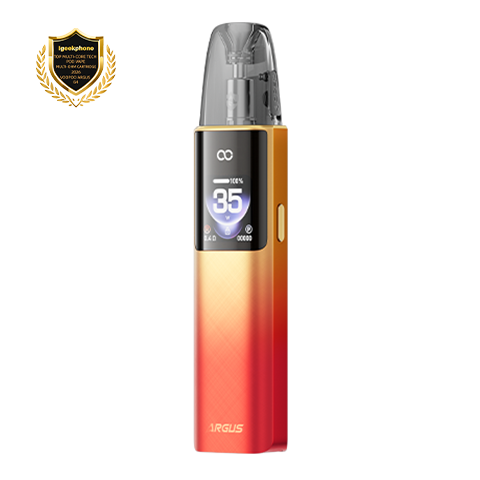
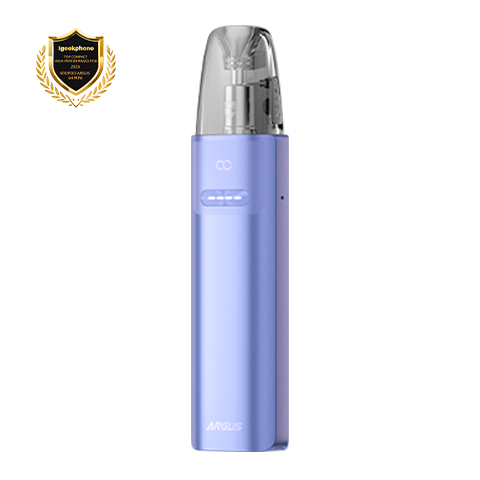
The ARGUS G3 features iCOSM CODE 2.0 with the ARGUS Top Fill Cartridge V2. Its 1500 mAh high-density battery delivers up to 5 days of use, while the device weighs just 65 g. The 0.96-inch TFT color screen, metal-edged design, and gradient colors add sophistication. Features include manual screen on/off for battery saving, 3 selectable themes, and precise airflow adjustment.
VOOPOO VRIZZ 2
The VRIZZ 2 brings iCOSM CODE 2.0's engineering philosophy into a new dimension with industry-leading dual mesh technology and a massive 15 mL cartridge. Powered by a 1350 mAh high-density battery, it supports up to 30 W output with three smart modes—TURBO, NORM, and ECO. In TURBO and NORM modes, dual meshes work together to generate enhanced vapor and flavor; in ECO mode, the two meshes operate alternately, extending cartridge lifespan by 200%. The 4-level adjustable airflow allows users to fine-tune draw resistance and vapor density for a personalized experience.
Recognized as "Best Beginner Vape" at the Vaping360 Awards 2025 and "Top Large Dual Mesh Cartridge Vape" in 2025 by Igeekphone, VRIZZ 2 delivers exceptional economy and flavor consistency, making it a top choice for users seeking maximum capacity without compromise.


Platform Comparison at a Glance
To help you better understand how these two engineering platforms differ across key specifications and use cases, the following table summarizes their core strengths, applications, and ideal user profiles.
| Platform / Core Strength | PnP X Platform | iCOSM CODE 2.0 Platform |
|---|---|---|
| Product Ecosystem | Mod & Pod Mod products — DRAG / VINCI series | Pod products — ARGUS / VINCI /V series |
| Leak-Proof Engineering | 4-layer leakage-proof architecture (physically isolated airway, heating zone, air cavity) | Liquid-Seal Shield copper chamber + dense e-liquid film (83% leak resistance improvement) |
| Coil / Cartridge Longevity | Single coil handles up to 100 mL e-liquid consistently | Single cartridge endures up to 100 mL |
| Core Materials & Heating | Mesh-distributed heating system, even energy spread | Liquid-Seal Shield + Golden Cotton (260°C) + Mega-Core |
| Featured Devices | DRAG S3, DRAG X3, DRAG 6, etc. | ARGUS G3, VRIZZ 2, etc. |
| Best Suited For | High-output users, cloud chasers, flexible wattage & draw styles | Portability focus, leak-proof priority, flavor preservation, beginners, max-capacity enthusiasts |
Matching Platform Strengths to Your Vaping Style
Choosing the right platform ultimately comes down to how you vape and what matters most to your daily experience.
- If you're a flavor chaser, both platforms deliver exceptional taste—but through different engineering approaches. iCOSM CODE 2.0's Golden Cotton preserves subtle flavor notes across the entire life of the cartridge, and VRIZZ 2's dual-mesh technology delivers 200% aroma intensity and 200% sweetness/coolness, ensuring every puff is rich and layered. PnP X's even heating technology prevents hot spots that can scorch e-liquid and distort flavor, giving you clean, consistent taste from start to finish.
- If you're always on the go, leak protection becomes your top priority. iCOSM CODE 2.0's cartridge-level architecture was specifically designed for portability and grab-and-go reliability. VRIZZ 2 combines this with a massive 15 mL capacity, meaning fewer refills and true travel freedom. Meanwhile, PnP X's 4-layer leakage-proof structure provides robust protection for tank-style setups.
- If you're a cloud chaser or high-volume user, PnP X's coil architecture is your ideal match. Found in devices like the DRAG S3, DRAG X3, and DRAG 6, this platform delivers the flexibility to switch between different draw styles—from tight MTL to unrestricted DTL—while its extended coil life means fewer replacements.
- If you're a vape beginner or transitioning from disposable vapes, simplicity, capacity, and reliability matter most. VRIZZ 2, winner of the Vaping360 "Best Beginner Vape 2026" award, eliminates guesswork with intuitive three-mode operation, 4-level airflow control, and a massive 15 mL cartridge system. It addresses the frustrations that turn beginners away—leaks, short battery life, and constant refilling—letting you focus on enjoying the experience.
- If maximum capacity and extreme cartridge longevity are your priority, VRIZZ 2 stands alone with the industry's largest 15 mL cartridge and dual-mesh technology that in ECO mode extends cartridge lifespan by 200%, giving you unprecedented value and minimal downtime.
What Platform Engineering Means for Vapers in 2026
The platform approach is changing how vapers evaluate new gear. Instead of only asking questions like, "What wattage does this support?" "What is the battery capacity?" or "What is the e-liquid capacity?", informed questions now sound different:
- Does this platform prioritize coil longevity or cartridge-level integration?
- How does the engineering address the specific failure modes I've experienced?
- What materials are used where heat and e-liquid interact?
- Does the device offer smart modes that adapt to my usage patterns?
These questions reflect a maturing industry. Vaping hardware has moved beyond generic components toward specialized solutions for different use cases. It means once you find a platform that matches your habits, you can expect consistent performance without hunting for compatible components.
As 2026 progresses, platform thinking will likely deepen. We're already seeing cross-pollination—coil innovations informing cartridge design, material advances benefiting both approaches. VRIZZ 2 demonstrates how dual-mesh synergy and massive capacity can redefine what a pod system can achieve, bridging the gap between beginner-friendly operation and advanced flavor delivery.
What won't change is the direction: toward reliability, consistency, and solving the problems vapers actually experience. The platforms that succeed will be those that deliver on these fundamentals, day after day, fill after fill.
.jpg)